
Tinubu Approves 15% Import Tariff on Petrol, Diesel Pump Price May Rise by ₦150
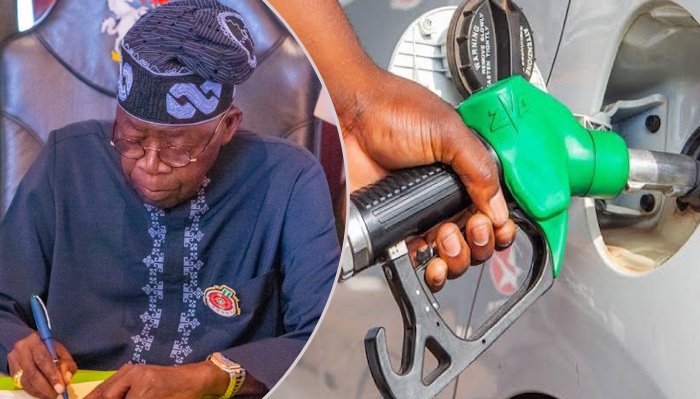
Nigerians may soon pay higher prices for petrol and diesel following President Bola Tinubu’s approval of a 15 per cent import tariff on refined petroleum products.
According to an official government document obtained by THISDAY on Wednesday, the new tariff — which takes effect immediately — is expected to add between ₦100 and ₦150 per litre to current fuel prices.
The memo, addressed to key officials including the Attorney-General of the Federation, Lateef Fagbemi; the Chairman of the Federal Inland Revenue Service (FIRS), Zacch Adedeji; and the Chief Executive of the Nigerian Midstream and Downstream Petroleum Regulatory Authority (NMDPRA), Farouk Ahmed, confirmed the development.
The approved proposal described the tariff as a “measured import duty” aimed at reinforcing national energy security, protecting local refiners, and stabilising the downstream petroleum market. It aligns with the Tinubu administration’s agenda to strengthen domestic refining and promote fiscal sustainability.
The document noted:
“The core objective of this initiative is to operationalise crude transactions in local currency, strengthen local refining capacity, and ensure a stable, affordable supply of petroleum products across Nigeria — aligning with the Renewed Hope Agenda for energy security and fiscal sustainability.”
Despite the progress in local refining and self-sufficiency in diesel production, the government said price instability persists due to the misalignment between local refiners and marketers. Import parity, it explained, remains the pricing benchmark but often falls below cost recovery levels for local producers, especially amid currency and freight fluctuations.
The newly approved tariff framework seeks to correct this imbalance and prevent duty-free imports from undercutting local refineries, while ensuring fair competition and consumer protection.
Under the new structure, an ad-valorem duty of 15% will be applied on the Cost, Insurance, and Freight (CIF) value of imported petrol and diesel at discharge. Based on current import levels, this translates to roughly ₦99.72 per litre, which the government said would bring import prices closer to domestic cost-recovery levels without making fuel unaffordable.
Even with the tariff, estimated pump prices in Lagos are projected to remain around ₦964.72 per litre ($0.62) — still lower than regional averages in Senegal ($1.76), Côte d’Ivoire ($1.52), and Ghana ($1.37).
Officials stressed that the policy is not designed for revenue generation but rather to create a fair and sustainable pricing environment. Payments will be made into a designated Federal Government revenue account under the newly restructured Nigeria Revenue Service (NRS), with verification by the NMDPRA before clearance of any imported cargo.
Although the document originally proposed a 30-day transition period for importers to adjust to the new tariff, President Tinubu reportedly directed immediate implementation, writing “Approved as prayed for implementation immediately.”
The policy draws its legal backing from Sections 71 and 72 of the Petroleum Industry Act (PIA), which empower the NMDPRA to issue regulations ensuring energy security and economic stability, as well as to recover costs incurred through public service obligations.
In line with the directive, the NMDPRA and the Nigeria Customs Service will update import templates and link discharge clearance to digital verification systems to ensure transparency and prevent speculation in the market.
The memo concludes that the reform is expected to accelerate Nigeria’s path toward fuel self-sufficiency, protect both consumers and investors, and stabilize the downstream market.
However, industry experts have expressed concern that Nigeria’s current refining capacity — dominated by the Dangote Refinery — may not be sufficient to support the new policy, given that the country still imports over 60 per cent of its refined petroleum products.