
Bayelsa Governor, Douye Diri To Join APC On Monday
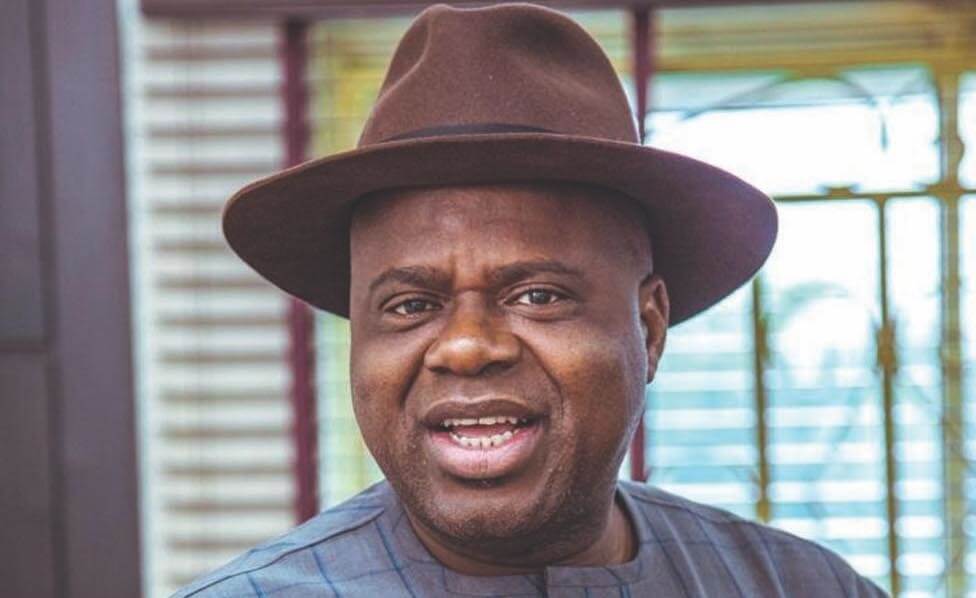
Bayelsa State Governor, Douye Diri, is set to officially join the All Progressives Congress (APC) on Monday, in what political analysts describe as one of the most significant defections in Nigeria’s South-South region since 2023.
According to TheCable, President Bola Tinubu, several APC governors, and top members of the party’s National Working Committee (NWC) are expected to formally welcome Diri into the ruling party during a ceremony scheduled to hold in Abuja.
Sources close to the development revealed that Diri, who resigned from the Peoples Democratic Party (PDP) on October 15, has spent the past few weeks in quiet negotiations with influential APC figures to finalize his move.
A senior APC source told TheCable that the governor’s delayed public declaration was a strategic decision aimed at ensuring a smooth integration of his political structure into the APC’s Bayelsa chapter ahead of the 2027 general elections.
“The governor wanted everything to be properly aligned before making it official,” the insider explained. “Both parties have been negotiating a sharing formula to guarantee mutual understanding and prevent internal conflicts after the defection.”
Diri’s crossover is being hailed within APC circles as a major political victory in the oil-rich South-South — a region that has long been a PDP stronghold.
The defection adds to the string of high-profile losses recently suffered by the PDP, which has seen its influence shrink across several states. In the past year alone, three sitting governors — Sheriff Oborevwori of Delta, Umo Eno of Akwa Ibom, and Peter Mbah of Enugu — have all joined the APC, further weakening the opposition party’s grip.
With Diri’s defection, the PDP’s governorship tally has reportedly dropped to eight states, heightening internal anxiety over what some members fear could become a total collapse of the party’s southern power base.
Insiders also hint that Taraba State Governor Agbu Kefas may be the next to abandon the PDP for the APC, signaling an even deeper crisis within Nigeria’s once-dominant opposition party.